Different grout chemistry
Epoxy grout behaves differently from traditional cementitious grout and requires careful installation.
CareSeal installs epoxy grout for suitable residential and commercial tiled areas across Sydney, including showers, bathrooms and other demanding wet-area applications. We assess the tiles, joints and existing condition first so the grout system matches the actual application.

CareSeal has been recognised in the 2026 Quality Business Awards as The Best Waterproofing business for Ku-ring-gai Council, NSW.
View CareSeal’s 2026 Award →CareSeal assesses the condition before recommending work. The goal is to solve the identified wet-area problem with an appropriate scope while keeping sound finishes in place where a suitable surface-first repair allows it.
Epoxy grout can be a strong option for suitable tiled areas that need a dense, durable and easier-to-maintain grout joint.
CareSeal assesses the tile surface, joint condition, existing grout and intended use before recommending epoxy. It can suit selected showers, bathrooms and demanding residential or commercial tiled areas, but it is not automatically the right grout for every installation.
Epoxy grout is a resin-based grout system with different installation and performance characteristics from conventional cementitious grout. Product selection and correct preparation still matter.
Epoxy grout behaves differently from traditional cementitious grout and requires careful installation.
Substrate and joint condition still matter before new grout is installed.
Movement joints still require appropriate flexible treatment rather than rigid grout.
Correct cleaning during installation is essential to the finished appearance.
The scope depends on whether the project involves replacing suitable existing grout or grouting a suitable prepared tiled area. CareSeal confirms the proposed work before installation begins.
We review tile type, joint dimensions, surface condition, existing grout and the intended wet-area or high-use application before recommending epoxy.
For suitable epoxy regrouting work, the agreed existing grout is removed and the joints are prepared for the selected system rather than simply covering deteriorated material.
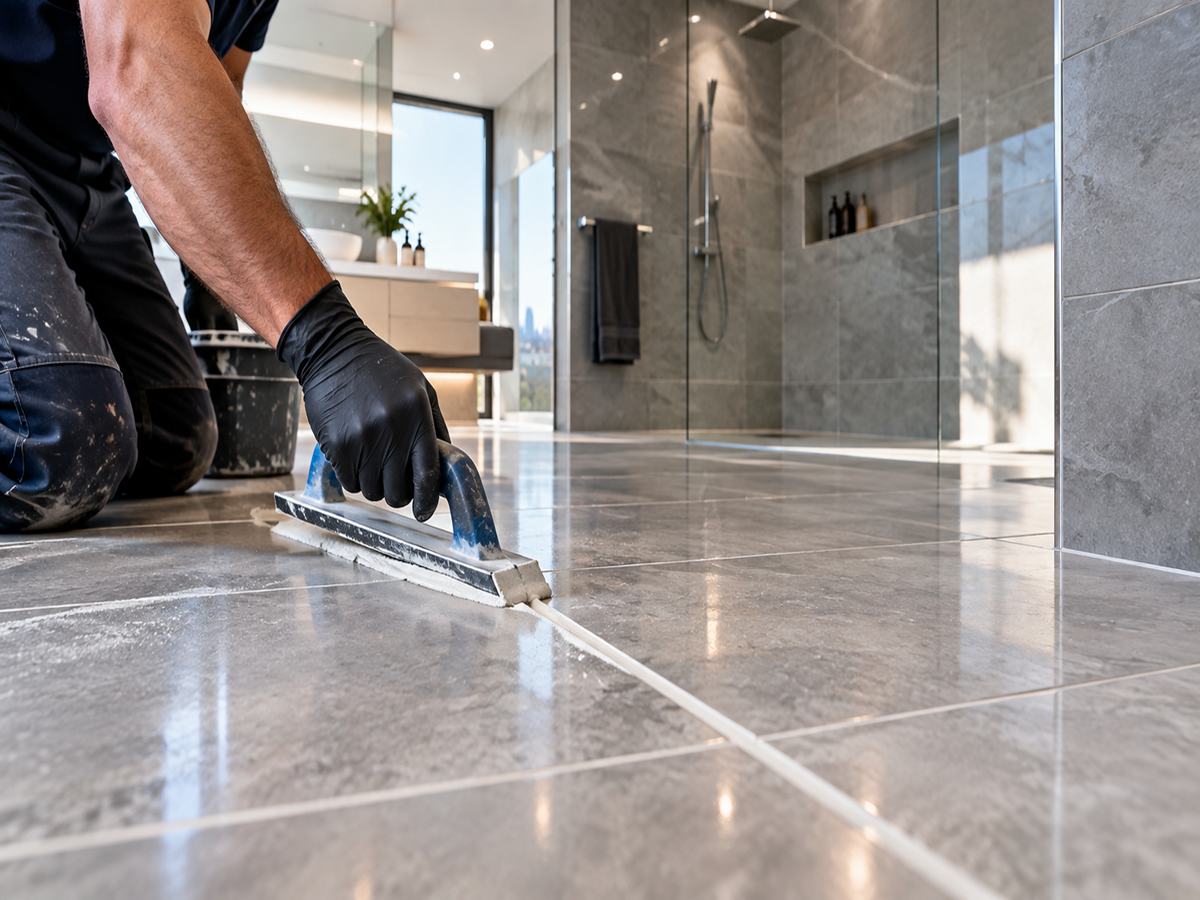
The selected epoxy grout is mixed, placed and finished in accordance with the agreed application, with careful attention to working time and surface cleanup.
Correct cleanup is important with epoxy systems. CareSeal also provides relevant curing and return-to-use guidance for the product and scope installed.
No. The better grout is the one suited to the tile, joint and service conditions.
Epoxy grout can offer useful performance characteristics in suitable wet or demanding environments, including low absorption and strong resistance to staining and wear. A quality cement-based grout can still be appropriate for many tiled areas.
Tile material, surface texture, joint size, existing condition, movement, cleaning requirements and budget can all influence the choice. CareSeal recommends the system after assessment rather than automatically specifying epoxy.
Suitable applications can range from residential showers and bathrooms to selected high-use commercial tiled areas.
For residential work, epoxy may be considered where the tile and joint condition suits a dense, low-absorption grout system. Commercial applications can have different traffic, cleaning, access and reopening requirements, so the project scope should reflect the actual site.
Start with the condition and the performance required, not the material name alone.
If the main issue is deteriorated grout and the material has not yet been selected, CareSeal can assess the area through our tile regrouting service →. For deteriorated shower grout specifically, see shower regrouting →. This epoxy page is for projects where an epoxy grout system is being considered for a suitable application.
CareSeal provides a clear quote after reviewing the condition and required scope.
Epoxy grouting is quoted after reviewing the tiled area, tile and joint condition, preparation or grout removal required, access and the epoxy system suitable for the agreed application.
Explore CareSeal project photography showing wet-area restoration, grout renewal, sealing and waterproofing work.
Explore the project gallery →Send photos and describe the problem. We review the condition and recommend the appropriate next step.
You receive a clear scope and quote before approved work starts.
CareSeal completes the agreed repair, regrouting, sealing or waterproofing scope.
We review the completed work and provide relevant care and return-to-use guidance.
Epoxy grout is a resin-based grout system with different installation and performance characteristics from conventional cement-based grout. The selected product, tile type, joint condition and application all matter.
It can be suitable for selected showers and bathroom tiled areas where the tile, joints and existing condition are compatible with the chosen system. CareSeal assesses suitability rather than treating epoxy as the automatic choice for every wet area.
Depending on the selected product and application, epoxy grout can provide a dense, low-absorption joint with strong resistance to staining and wear. Actual performance depends on the grout system, installation, exposure and ongoing care.
Not for every project. Epoxy can be valuable in suitable demanding applications, while quality cement-based grout remains appropriate for many tiled areas. Tile material, joint size, surface condition, movement, usage and budget should guide the choice.
In suitable applications, yes. Epoxy regrouting can involve removing the agreed existing grout, preparing the joints and installing a compatible epoxy system. The existing tile and joint condition must be assessed first.
Epoxy regrouting is generally focused on the grout joints, so sound tiles can remain where the existing installation is suitable. Loose tiles, substrate problems, waterproofing failure or other underlying defects can require a different scope.
CareSeal can assess suitable commercial tiled applications within its service scope. Commercial work may require consideration of traffic, cleaning, access, staging and curing or reopening requirements in addition to the tile and joint condition.
No. Corners, changes of plane and other movement joints may require an appropriate flexible seal rather than rigid epoxy grout. CareSeal considers those joints separately when defining the scope.
CareSeal provides a project-specific quote after reviewing area size, tile and joint condition, preparation or grout removal required, access and the epoxy system suitable for the application.
Timing depends on the area, preparation, existing grout removal, tile and joint condition, access and the selected epoxy system. Many CareSeal wet-area repairs are completed within 1–2 days, but project-specific timing and curing guidance take priority.
Return-to-use and curing requirements vary by epoxy product and application. CareSeal provides the relevant job-specific guidance after installation; that guidance takes priority over general timing.
Send an overall photo of the tiled area plus close-ups of the existing grout, tile surface, corners or movement joints and any damaged areas. Approximate dimensions, tile size or material if known, and whether the site is residential or commercial are also useful.
Qualifying CareSeal work can include a written guarantee of up to 7 years. The applicable guarantee depends on the service, product and scope quoted for the job.
Explore CareSeal service information for selected Sydney suburbs and regions.
Include an overall view plus close-ups of the existing grout, tile surface, corners or movement joints and any damaged areas. Approximate dimensions, tile size or material if known, and whether the site is residential or commercial are also useful.