How to Regrout Ceramic Tile: Step-by-Step Guide
Learn when ceramic tile can be regrouted, how to prepare the joints, which grout to choose and when professional assessment is safer.
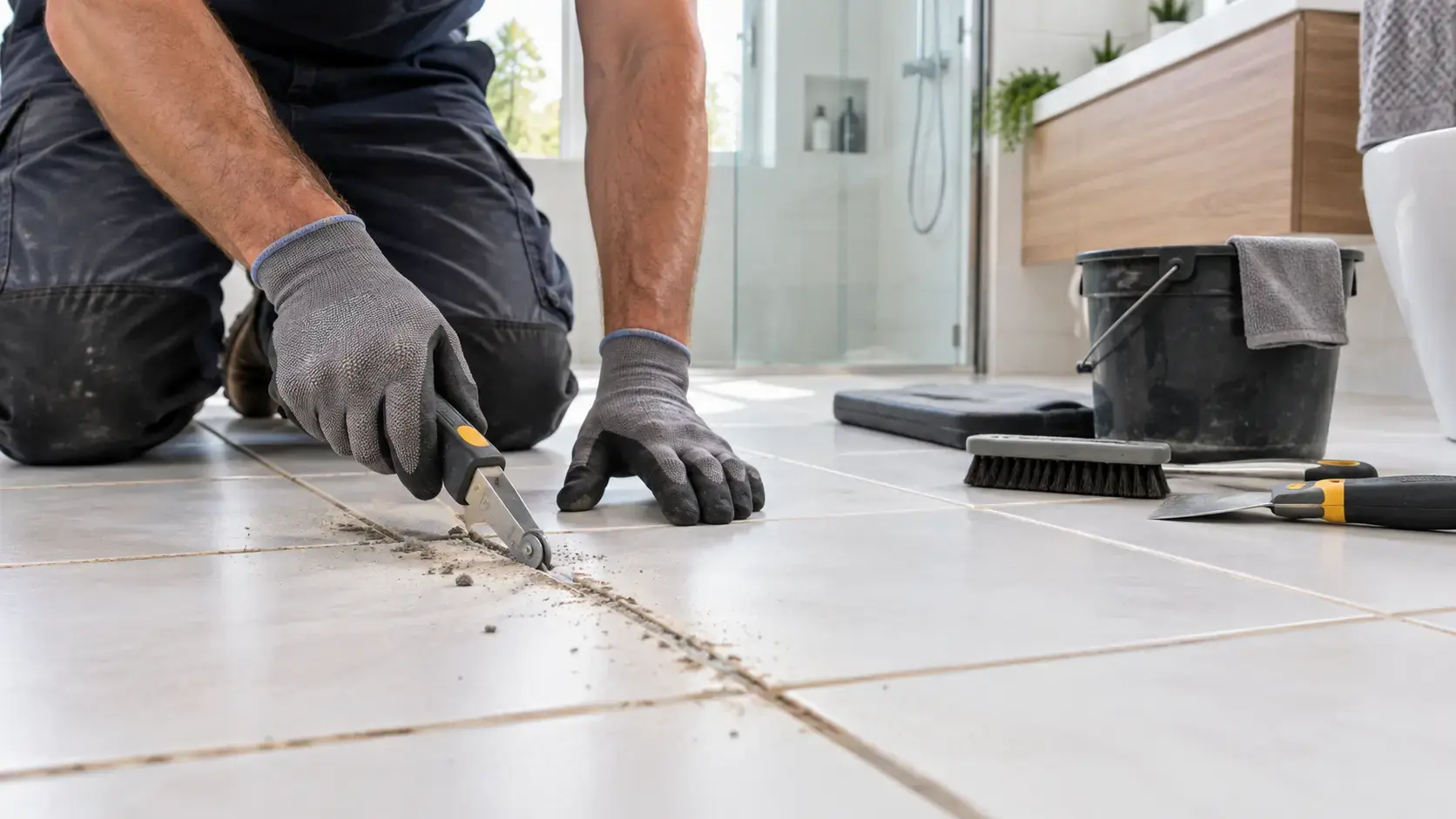
Ceramic tile can often be regrouted without removing sound tiles, but only when the failure is within suitable grout joints. The quality of the preparation matters as much as the replacement material.
Can ceramic tile be regrouted?
Regrouting may be suitable when tiles remain firmly bonded and the grout is cracked, missing, powdery or permanently stained. Inspect the complete area because the worst-looking joint may not be the only defect.
Regrouting does not correct loose or drummy tiles, substrate movement, plumbing leaks or a failed underlying waterproofing membrane. Those conditions need a different assessment before new grout is installed.
Tools and preparation
Typical equipment includes a manual grout saw or controlled removal tool, safety glasses, gloves, suitable dust protection, a vacuum, nylon brush, grout float, buckets and clean sponges.
Remove suitable failed grout to an appropriate, consistent depth without damaging tile edges. Vacuum debris and prepare the joints according to the replacement grout manufacturer's requirements.
- Separate rigid grout joints from corners and movement joints
- Protect tile edges and nearby fixtures
- Use clean tools, water and mixing containers
- Confirm the grout suits the tile, joint width and exposure
Step-by-step regrouting process
Mix the grout using the specified ratios and respect its working time. Pack the prepared joints with a float, working diagonally across the tile face so the joints are filled rather than skimmed.
Clean at the correct stage using light passes and clean sponges. Excess water or aggressive washing can weaken or hollow the joints. Remove final haze as directed and protect the area throughout curing.
- Inspect and define the repair scope
- Remove suitable deteriorated grout
- Clean and prepare the joints
- Mix and install the replacement grout
- Clean, finish and allow the full cure time
Cement grout or epoxy grout?
Cement-based grout remains appropriate for many ceramic-tile applications. Epoxy grout can provide dense, durable joints in selected wet or high-use areas, but its application and cleaning are more demanding.
Neither product should automatically fill corners, changes of plane or designated movement joints. Those locations may require a compatible flexible sealant.
Common mistakes and when to call a professional
Common failures include applying a thin layer over loose grout, adding too much water, damaging tile edges during removal, letting haze cure on the tile or using rigid grout where flexible movement is expected.
Professional assessment is worthwhile for showers, balconies, active leaks, large areas, epoxy grout or any job where tiles may be loose. Pricing depends on area, joint condition, preparation, access and the selected grout system.
How to Regrout Ceramic Tile: Step-by-Step Guide FAQs
Can I apply new grout directly over old grout?+
A thin surface layer over loose or contaminated grout is unlikely to last. Suitable failed material normally needs removal and the joints need proper preparation.
Do ceramic tiles need to be removed?+
Not when the tiles are sound and the problem is limited to suitable grout joints.
Can regrouting stop a shower leak?+
It may form part of a repair when failed grout is relevant, but silicone, plumbing, substrate and waterproofing conditions can also cause water escape.
How long before the area can be used?+
Curing times vary by product and conditions. Follow the manufacturer's instructions and job-specific installer guidance.
Is epoxy grout always better?+
No. The correct choice depends on the tile, joint, exposure, existing condition and required performance.