Why Showers Leak: Grout, Silicone or Waterproofing?
Understand common shower leak clues and why diagnosis matters before choosing regrouting, sealing or another repair.
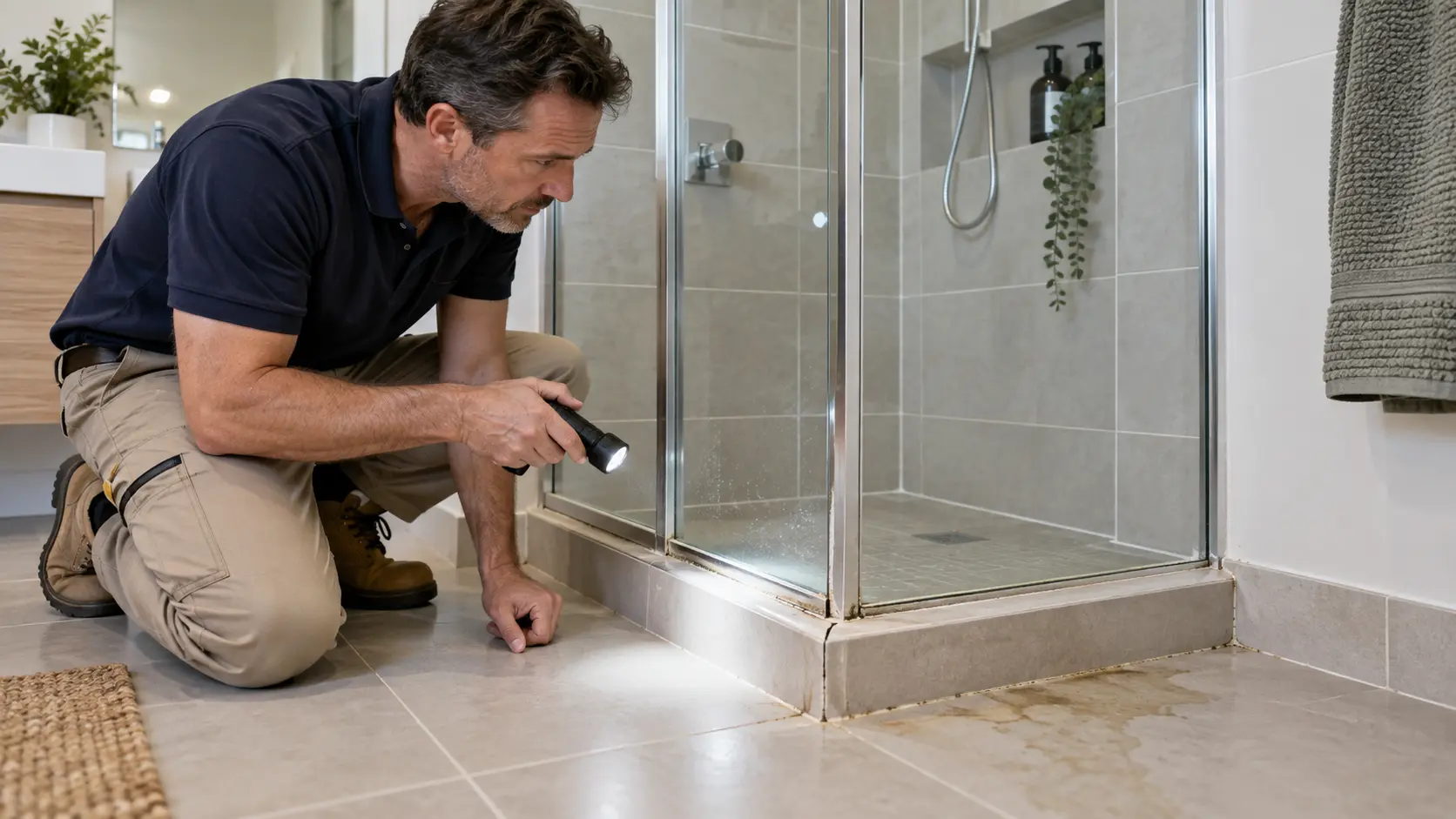
A shower can leak through failed accessible joints, a plumbing defect or a deeper construction problem. The location of visible water does not always reveal where it entered.
Common signs of a leaking shower
Warning signs include water outside the screen, damp skirting or flooring, staining in an adjacent room, recurring mould, missing grout and silicone separating from tile or glass.
Note whether the symptom appears only during use, after prolonged wetting or even when the shower is not being used. That timing helps narrow the likely source.
- Water beyond the shower enclosure
- Cracked or missing grout
- Separated corner or screen silicone
- Dampness in an adjoining area
- Repairs that repeatedly fail
How grout can contribute
Deteriorated grout can allow moisture into accessible tiled-surface joints, particularly when material is missing or powdery. Regrouting may be suitable when tiles are sound and the defect is confined to appropriate joints.
Grout is not the waterproofing membrane and should not be treated as the explanation for every leak. Loose tiles or movement can indicate a broader issue.
How silicone and flexible joints fail
Silicone can shrink, split, lose adhesion or become contaminated. Screen edges, corners and wall-to-floor transitions are common locations to inspect.
A durable renewal normally requires failed material to be removed and the surfaces cleaned and prepared. Adding a bead over old silicone rarely provides a reliable joint.
Plumbing and underlying waterproofing
Leaks from pipes, taps, wastes or fittings can mimic a surface-sealing problem. Underlying membrane or substrate failure can also allow water to travel before it becomes visible.
These conditions require the appropriate specialist. A surface treatment should not be sold as a substitute where the evidence points deeper.
Choosing the right starting point
Start with Shower Leak Repair when water is actively escaping and the source is uncertain. Choose Shower Regrouting when deteriorated rigid joints are the main concern, or Shower Sealing when failed flexible seals are clearly the issue.
Clear photos and a short description help CareSeal assess the visible condition before recommending a scope.
Why Showers Leak: Grout, Silicone or Waterproofing? FAQs
Does cracked grout always mean the shower is leaking?+
No. It is a defect worth assessing, but the water source may involve another joint, plumbing or an underlying condition.
Can silicone alone stop a shower leak?+
Only when a failed accessible flexible joint is the relevant entry path.
Why does water appear away from the shower?+
Water can travel behind finishes or along junctions before becoming visible.
Can sound tiles remain in place?+
Yes, where an appropriate surface repair can address the identified defect.
Who should inspect a suspected plumbing leak?+
A licensed plumber should assess pipes, wastes, taps and other plumbing components.